

The Japanese Puzzle Games That Went Mainstream Worldwide
Some puzzle games did not just travel, they quietly moved into everybody’s brain. That is what happened with a lot of Japanese puzzle games. They did not always explode onto the world stage in some loud dramatic way. Sometimes they just slipped in through handheld consoles, newspaper pages, arcade cabinets, school bags, or the side of the internet where people go to play fun online games for “five minutes” and come back much later looking slightly dazed.
The funny part is how simple many of these games look from the outside. Blocks. numbers. boxes. blobs. That is it. Nothing flashy. No giant lore bible. No complicated controls. And yet these games stuck. Deeply. Permanently. They became part of global puzzle culture because they understood something important very early: simple rules do not mean shallow games.
Tetris
Tetris is the obvious giant here. It was created in the Soviet Union, yes, but Japan played a huge role in turning it into a worldwide obsession, especially through Nintendo. Once it landed on the Game Boy, the thing stopped being just a clever puzzle and became a habit. A lifestyle, practically.
Its power came from how clean it was. Rotate falling blocks. Clear lines. Try not to panic when the stack climbs too high and your brain starts making very poor decisions. That was enough. Still is. Tetris proved that puzzle games could be elegant, universal, and ruthlessly addictive without needing anything extra glued onto them.
Puyo Puyo
Puyo Puyo is much sillier on the surface, but do not let the cute colors fool you. This game has ruined many calm afternoons. Instead of simple matching, it builds around chain reactions, which means the real skill is not just clearing blobs but setting up nasty little combos that explode later.
That made it huge in Japan, where competitive puzzle play was already taken seriously. In the West, it took longer to catch on properly, but it got there. Once players understood the joy of building a chain and watching the whole board pop off in one glorious cascade, it made perfect sense. Puyo Puyo has that brilliant quality some great puzzle games share: it looks friendly right up until it humiliates you.
Picross
Picross feels quieter than the others, but its reach is enormous. Nintendo handhelds helped a lot here. Suddenly loads of players were getting into number-grid puzzles without even realising they were learning a very specific kind of logical discipline.
The appeal is easy to understand. You use number clues to reveal a hidden picture on a grid. That is the whole idea. But it scratches such a good mental itch. Part art, part deduction, part tiny argument between you and the grid. It is calm, clever, and extremely good at making you mutter “wait, no, that square cannot be filled” under your breath.
Sokoban
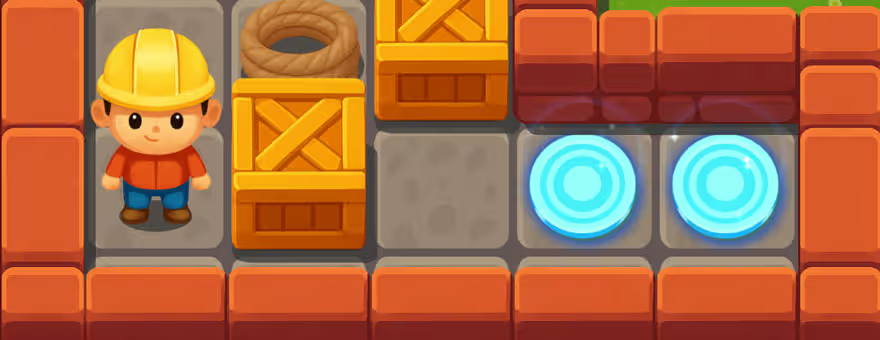
Sokoban is one of those games that looks almost too plain to matter until you actually play it. Then it grabs you by the brain and refuses to let go. Push boxes into the correct places. That sounds harmless. It is not harmless. It is a deeply sneaky logic puzzle that inspired a ridiculous number of clones, tributes, and variations around the world.
What makes Sokoban so enduring is that every move matters. You cannot just fix a bad decision with enthusiasm. You have to think ahead, because one badly pushed box can ruin the whole setup. It is the sort of puzzle design that keeps showing up in modern games because it is just that solid.
Sudoku
Sudoku is another interesting case. The puzzle itself has older roots, but Japan was crucial in popularising it and packaging it in the form the world came to know. Once it spread, it spread everywhere. Newspapers. Puzzle books. apps. websites offering free single player games online. Everywhere. Its genius is the clarity of the rules. Fill the grid. No repeats in rows, columns, or boxes. That is it. The simplicity invited millions in, and the depth kept them there.