

Can Old Games Be Revived Successfully Just By Nostalgia Alone?
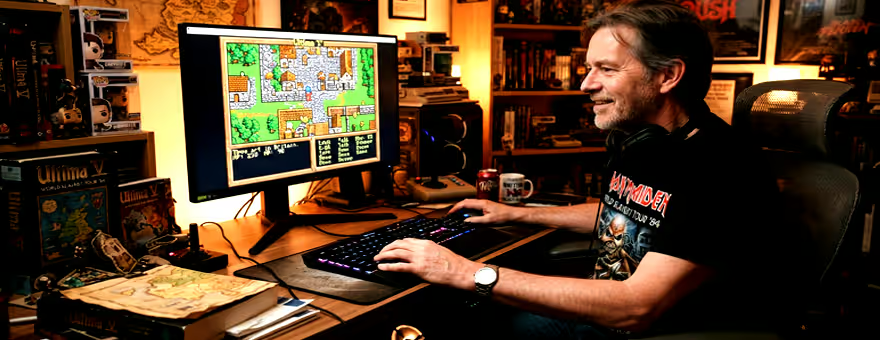
A lot of gamers today love to play Retro Games. For starters, these games offer pure, uninterrupted gameplay focused entirely on fun, skill, and mastery. Unlike many of the modern games we have today, Retro games are generally not weighed down by such things as massive day-one updates, mandatory online registrations, micro-transactions, and unskippable cinematic tutorials. The limitations of the technology of the past forced developers of the time to prioritize on rock-solid game mechanics, tight controls, and creative level challenging designs. Getting into the gameplay was a lot quicker enabling players to immediately immerse themselves in the gaming experience and enjoy a complete, fully realized game from start to finish.
What's more, Retro Games have a timeless artistic charm and a practically unmatched level of pick-up-and-play accessibility. To many older retro-arcade adventure aficionados, the distinctive pixel art, low-poly 3D graphics, and iconic "chip-tune" soundtracks bring out a powerful sense of nostalgia while still remaining visually and aurally super-cool as the play fun online games today. Retro games are generally easy to learn and hard to master, thus offering a rewarding "difficulty curve" that respects the player's skill in any generation.
Young Again
The amusing thing about Nostalgia is that it emotionally and temporarily takes one back in time to a fond memory in the past which means so much to the person experiencing it in the present. This is why Nostalgia gets stronger the older one gets, and senior gamers have a lot of these stored in them. The trigger (since they are gamers) is the games they played way back when the grass was green and the sky was blue, well, you know what that means. The Retro game acts like a bridge, connecting the gamer to a sense of comfort, familiarity, and simpler times.
Playing a particular nostalgic game can trigger memories of childhood, friends, and specific periods of one's life as the familiar old style graphics and soundtracks provide an emotional comfortable “safe zone” that temporarily removes the player from the stress of current-day life. To this, Nostalgia shapes how players see and appreciate Retro Game design, often filtering out its limitations while amplifying the game's strengths. This results in a shared cultural currency, allowing retro-gamers to bond over collective memories of challenging levels, gameplay rumors, and shared gaming achievements.
Younger players experiencing these classic games today develop a sort of "borrowed nostalgia" resulting from a romanticized fascination with the aesthetic, history, and gaming cultural of past, making retro-gaming uniquely rewarding across gamer generations.
Is Nostalgia Enough?
Unfortunately, in all sense and practicality, retro games cannot be revived successfully by nostalgia alone. Nostalgia is just the trigger that gets the senior players to use the controller, or the mouse and keyboard. Marketing a classic title or a retro-inspired revival can easily utilize childhood memories to generate massive day-one sales, but, nostalgia can wear off rapidly if the game itself is frustrating or too outdated to play. Relying purely on sentimental value without offering rock-solid gameplay can lead to disaster. A player may simply get tired of the game once the nostalgic emotion has passed, so the game must be able to maintain its original immersive quality with its timeless core mechanics.
Also, historical preservation must be balanced with modern convenience and accessibility, like being able to run the old classic “Ultima V” on the latest gaming PCs today. The old game limitations have to be taken into account like the old clunky UI and control systems, unfair difficulty, and lack of newer automated features that even the simplest single player games online have today. However, these old limitations may also be the nostalgic features that an old gamer misses and looks for. Modern-day spiritual successors and re-masters often succeed by merging classic pixel-art and graphical aesthetics with fluid, modern performance and refined design. A modern rendering of the old “chip-tune” soundtracks can do wonders for the nostalgic approach.
Nevertheless, whatever the degree “Nostalgia” plays in today’s modern-day retro-gaming revival efforts (and the industry it brings with it), it will continue to grow because it offers a direct antidote to the player fatigue caused by the modern gaming industry. Younger gamer generations like Gen Z (who have no personal nostalgia for 1980s, or 90s gaming) are actively turning to Retro Games to escape mandatory day-one updates, predatory micro-transactions, and overly bloated open worlds. The main attractions are the game’s plug-and-play simplicity, respect for the player’s time, and the pure uninterrupted focus on fun, skill, and mastery. Nostalgia might open the door, but it is the excellent, timeless, classic game design and mechanics that keeps the retro-gaming door open.